
Outdoor dining space design in Minnesota means reckoning with extremes:
We have to reckon with the fact that July evenings can hit 90 degrees while March mornings still bite with winter’s last frost.
And we also have to reckon with the fact that the growing season runs shorter here than almost anywhere.
Those perfect weeks when you can leave the doors open and let air move freely between inside and outside are precious and fleeting.
I think about this every spring when the first warm day arrives and every patio in the Twin Cities fills instantly, and you notice people tilting their faces toward sun like sunflowers.
That hunger for outdoor space is real.
And it’s created an interesting design challenge: how do you build outdoor dining spaces that work beyond those twelve perfect weeks?
The usual approach treats outdoor dining as seasonal:
Set it up in May, tear it down in October, accept the limitation.
But that’s leaving money on the table.
More than that, it’s missing what outdoor space can be when you design it to flex with our climate rather than surrender to it.
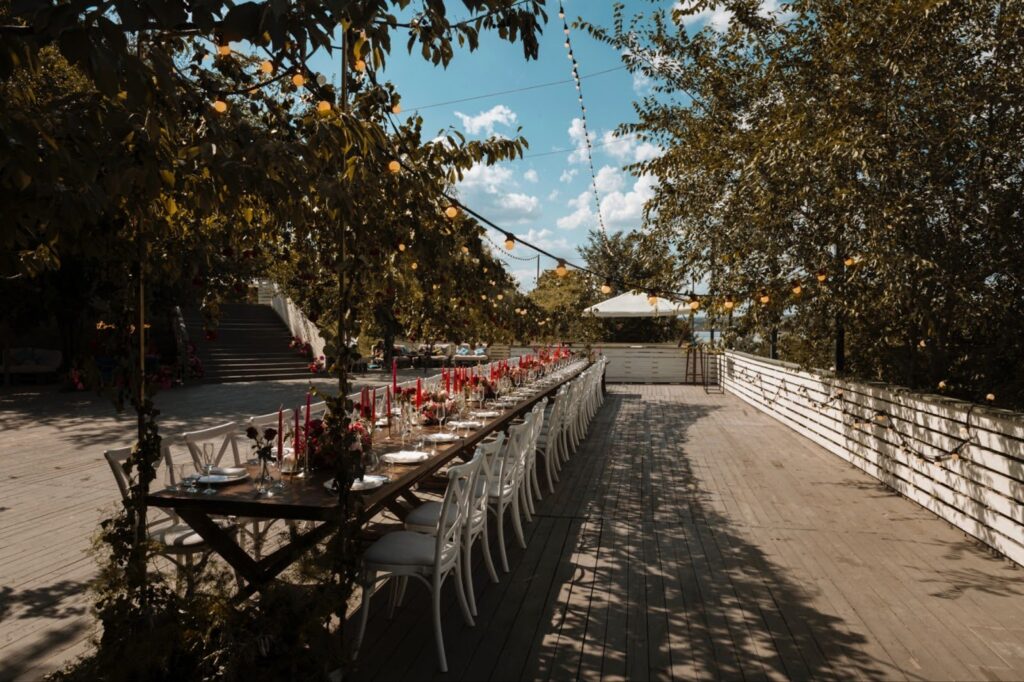
Understanding Minnesota’s Actual Seasons
The Minnesota State Climatology Office breaks down our reality pretty clearly: average last frost in spring ranges from late April to mid-May depending on where you are.
And the first frost in fall is mid-September to early October.
But climate patterns are shifting, and it’s a reality we have to account for.
Minnesota’s growing season has lengthened by about two weeks over the past 50-60 years.
Spring arrives earlier, fall lingers longer.
Which means the opportunity window for outdoor dining space design that actually gets used is expanding, if you build for it.
I talked with a restaurant owner in Linden Hills whose patio used to sit empty from October through April.
He told me he saw seven months of nothing, using the patio effectively for furniture storage.
Last year, they added modular glass walls and overhead heating.
Now, they’re seating people outside through Thanksgiving, picking up again in March.
That’s five more weeks of outdoor revenue, which for them meant an additional $40,000 in annual sales.
The climate here teaches you to think in seasons, plural.
You’re designing four different versions of the same space, each responding to different conditions.
The Three-Season Approach
Most successful outdoor dining space design in the Twin Cities aims for three-season use: late March through November.
That’s achievable without building a full greenhouse, which is what a four-season approach essentially requires.
So, comfort thresholds are worth thinking about.
People will sit outside in surprisingly cold weather (40, even 35 degrees) if they’re protected from wind and have a heat source overhead.
Wind protection matters a lot, so much so that I would say it sometimes matters even more than temperature.
Block the wind, add radiant heat, and you can extend the season by weeks on either end.
Here’s what that looks like in practice:
- Spring (March-May): Focus on wind protection and sun exposure.
People want to feel warmth, see light.
Retractable walls or heavy-duty clear vinyl curtains give protection while maintaining that crucial sense of being “outside.” - Summer (June-August): Now you need the opposite, including shade, airflow, maybe even cooling.
Retractable awnings, ceiling fans, misting systems.
This is when your outdoor space needs to breathe. - Fall (September-November): Back to wind protection and heating.
The light is beautiful but slanted.
Those long autumn evenings when the temperature drops fifteen degrees between dinner and dessert are when overhead heaters become worth every penny you spend on propane or electricity.
Heating Solutions That Work
I’ve seen plenty of outdoor dining spaces with heating that’s more theater than function.
A few decorative heat lamps that barely warm a five-foot radius.
It looks cozy, but it doesn’t feel cozy.
For real performance, you need to run the numbers.
Infrared patio heaters typically put out 30,000-40,000 BTUs.
One heater can reasonably warm about 100 square feet in still air.
But add wind, and that effective area shrinks pretty fast.
This is why wind protection comes first, because it makes your heating investment actually work.
Options worth considering:
- Overhead infrared heaters: Clean, efficient, no flames.
For instance, Heatstrip and Infratech make commercial-grade units that mount to structures or pergolas. - Under-table radiant heat: Less common but remarkably effective.
This warms bodies directly rather than trying to heat all the air. - Fire features: Real wood fires or gas fireplaces create gathering points.
They don’t heat large areas efficiently, but they change how people perceive temperature because fire really does have that primal je ne sais quoi. - Heated floors: If you’re building new or doing major renovation, radiant floor heating in concrete or under pavers is the luxury solution.
Expensive upfront, but it can really change everything.
The best outdoor dining space design incorporates multiple heat sources in zones, which means not trying to keep the whole patio at 72 degrees, but creating warm pockets where people can settle comfortably.
In our mind at Studio M, the most thoughtful commercial building design will consider these climate control zones from the beginning.
Enclosure Systems
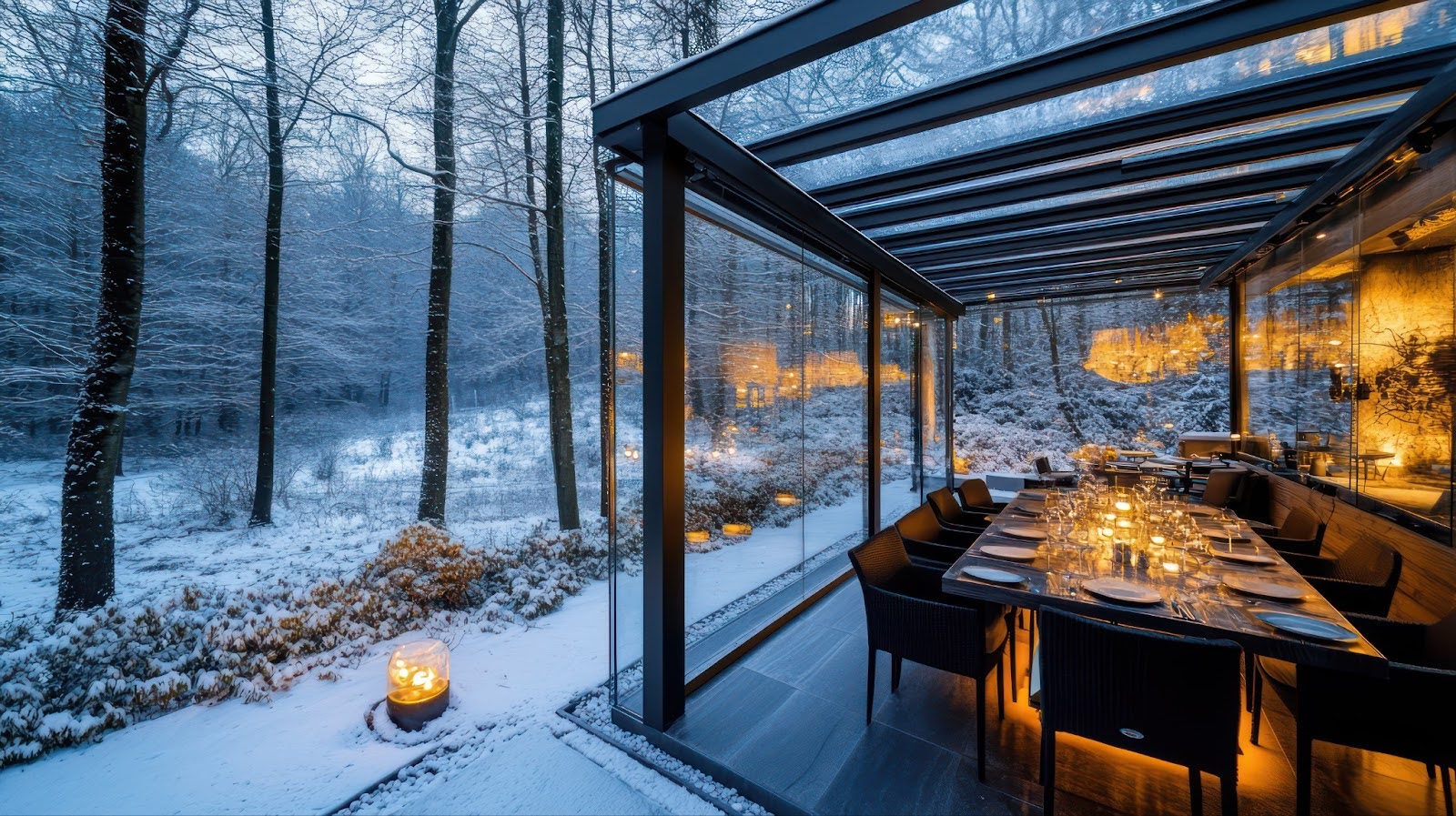
Outdoor dining space design, especially in a wintry climate, requires navigating the dynamic between inside and outside, how you define it, how you make it flexible.
Glass walls seem like the obvious answer, and they can be beautiful.
NanaWall and similar systems let you fully open in summer, fully enclose in shoulder seasons.
But they’re expensive (often $1,000-2,000 per linear foot installed).
And they create an expectation: if it looks like indoor space, people expect indoor comfort.
You’re committing to serious climate control.
Less expensive but still effective: heavy-duty vinyl curtains.
Roll-up clear vinyl panels can be specified for Minnesota winters, rated to -20°F, UV-stabilized so they don’t yellow.
They look more industrial, less refined, but they work, and they cost maybe a quarter of what glass systems run.
I’ve also seen clever hybrid approaches: glass on the windward sides (usually north and west in the Twin Cities), vinyl on the others.
Or permanent glass walls with sections that open, supplemented by vinyl curtains for shoulder season.
One café in St. Paul uses roll-down bamboo shades in summer (blocks sun, allows airflow) then swaps them for clear vinyl panels in fall.
It takes a crew about two hours to change over, but the seasonal rhythm can become a firm part of the space’s identity.
Overhead Protection
Those of us who live here will know that Minnesota weather can turn vindictive fast.
There’s the July thunderstorm that rolls in at 6 PM, right when your patio’s full, and the September rain that lasts three days.
Your outdoor space needs overhead protection that works even when (especially when!) conditions are less than perfect.
Fixed roofs are the sure thing.
Metal, wood, even polycarbonate panels.
They define the space architecturally, support utilities and heating, keep rain off diners.
But they’re permanent, and you’re committing to that footprint, that aesthetic.
Commercial building architectural design needs to balance these permanent elements with flexibility for future changes.
Retractable awnings split the difference.
SunSetter and KE Durasol both make commercial-grade systems that can span 20+ feet.
Motorized, weather-sensing, can be tucked away in summer when you want open sky.
They’re not cheap, figure $5,000-15,000 depending on size, but they buy flexibility.
Pergolas with retractable canopies give you the best of several worlds.
The structure provides year-round architectural definition and supports utilities.
The fabric canopy slides open or closed depending on need.
Whether in need of sun, shade, or rain protection, you can adjust as conditions demand.
Or go simpler with large market umbrellas, the kind you see in European squares.
Tuuci makes commercial umbrellas that can handle Minnesota wind if properly weighted.
They’re modular, movable, easy to reconfigure.
And they’re beautiful: engineering that looks like craft.
Dealing With Snow and Ice
Nobody talks about this until they’ve lived through a Minnesota winter with an outdoor dining structure.
Snow load is a huge consideration, ice dams form, and drainage freezes.
If your roof system isn’t rated for snow load of at least 40-50 pounds per square foot, we’ve learned over the years that you are likely going to have problems.
Fabric canopies need to be retracted before heavy snow.
Fixed roofs need proper pitch for drainage, minimum 2:12, preferably steeper.
Heated gutters sound extravagant until the first time you deal with ice dams crashing down near diners.
Heat tape in gutters and downspouts costs maybe $500-1,000 for a typical patio, runs only when temperatures are near freezing.
But honestly, the cost-saving in the long run makes these sorts of investments beyond worth it.
And think about snow storage.
That’s not usually a problem in summer-only spaces, but if you’re using your patio through November, you need somewhere to put the snow from those early-season storms.
Lighting Design That Works Year-Round
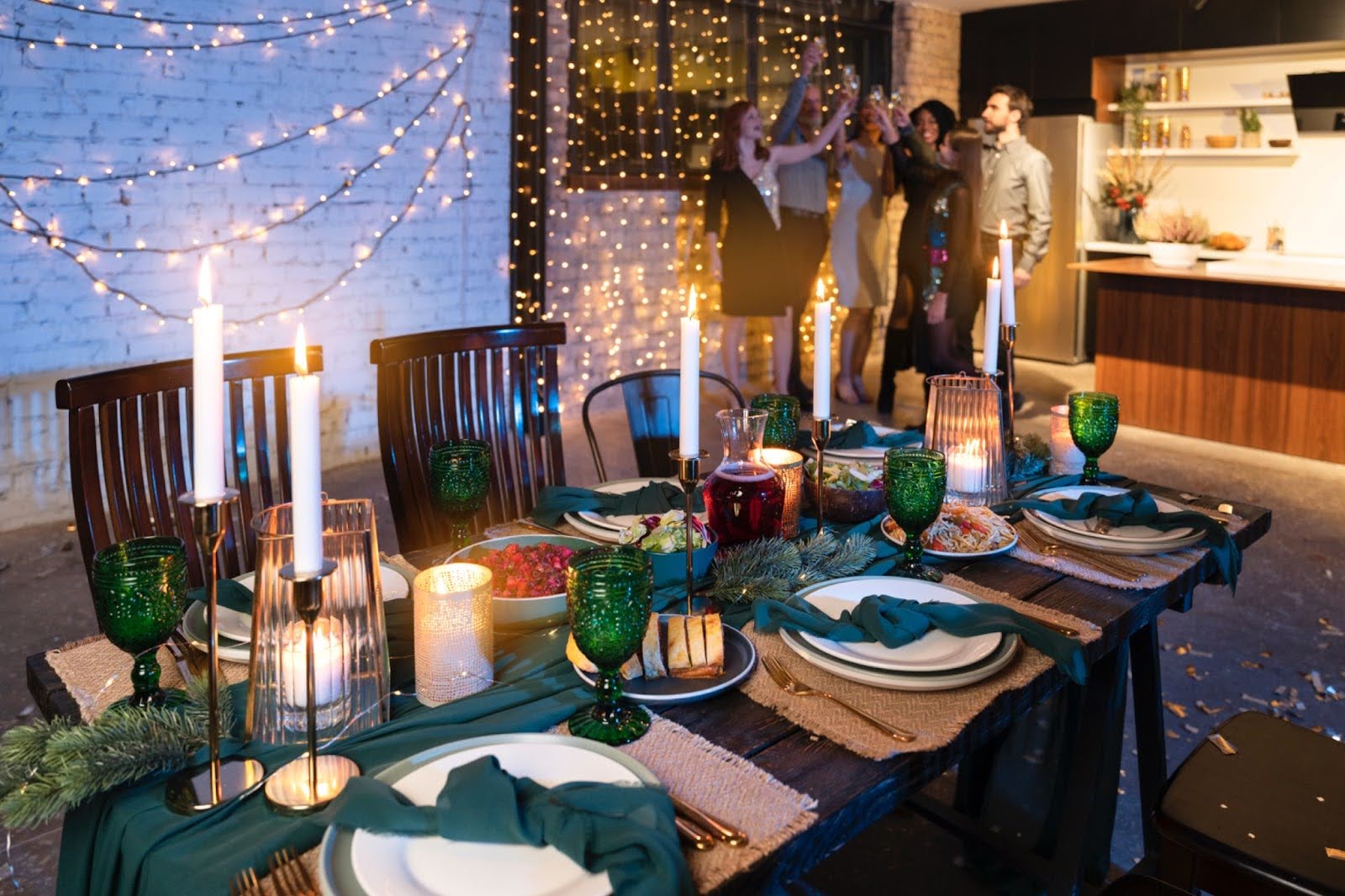
Outdoor dining space design needs lighting that serves different conditions, from summer nights when it doesn’t get dark until 9 PM to fall, when you’re seating dinner at 5 and it’s already dusk.
You may also wish to account for those frosty winter mornings when you’re doing brunch service and the sun is low and thin.
Layered lighting is, in our opinion at least, the easiest and most rewarding answer.
Multiple sources at different heights serving different purposes just works, no matter the space.
Opt for overhead ambient light for general visibility. mid-level accent lighting for atmosphere, and low path lighting for safety.
String lights have become ubiquitous, and there’s a reason for that too:
They’re relatively cheap, they create atmosphere, people like them.
But they’re not enough by themselves.
You need task lighting at tables, particularly for winter months when daylight is scarce.
I’m partial to LED strips under bar rails and table edges.
They throw light exactly where it’s needed without glare, they’re energy-efficient, and you can dim them as daylight changes.
Plus, they’re protected from weather, which is absolutely crucial when you’re dealing with freezing rain.
And it’s important to think about color temperature carefully, an often-overlooked feature, but white light in the wrong places can be soul destroying.
That said, it can maximize functionality in the right spots.
Warm light (2700-3000K) feels inviting in cold weather.
Cooler light (4000K+) helps in summer heat, when used in the right doses.
And programmable LED systems are the versatile choice, as they let you adjust seasonally.
Furniture That Survives
This seems obvious but it trips up so many projects: outdoor furniture in Minnesota needs to be actually weather-resistant, not just weather-tolerant. There’s a difference.
Powder-coated aluminum frames hold up better than steel (which rusts) or wood (which rots or warps). HDPE synthetic materials like Polywood look like wood, feel like wood, but they’re maintenance-free and can stay outside all winter. They’re pricey upfront but the lifecycle cost works out better than replacing cheap furniture every two years.
Cushions are the weak point. Even “outdoor” fabric gets grungy, holds moisture, mildews. Some restaurants go cushion-free—all hard seating—which sounds less comfortable but actually works fine if the chairs are well-designed. Others have storage systems where cushions come inside nightly or seasonally. It’s labor-intensive but keeps things nice.
A brewery in Northeast Minneapolis just uses wool blankets in fall and spring—draped over chair backs, available for diners who want them. The blankets are washing-machine friendly, they’re cozy, and they signal “we know it’s a bit cold but we’ve thought about your comfort.” Small detail that changes the experience completely.
Working With What You Have
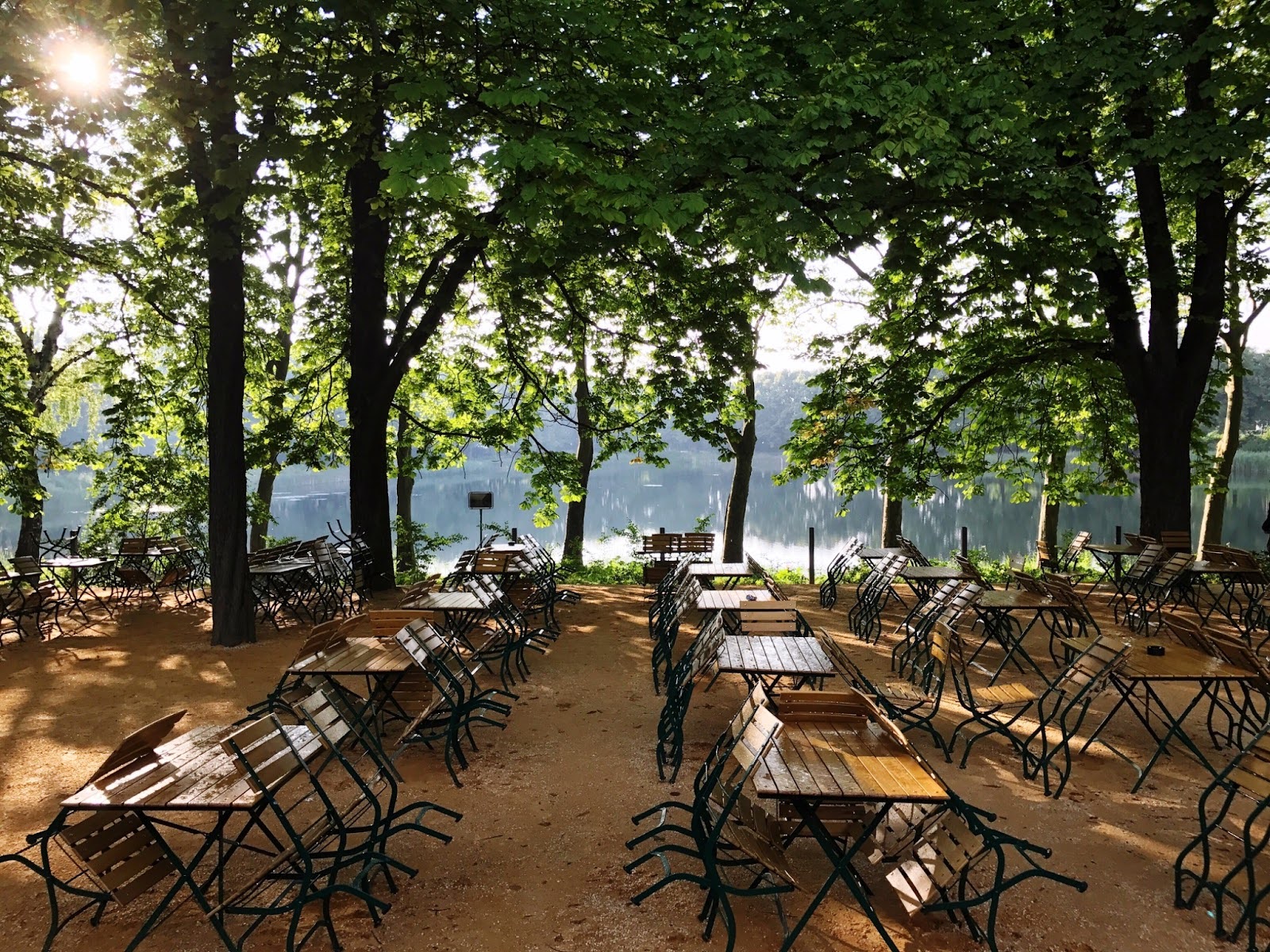
Not every space can become year-round dining.
Some sites are too exposed, too shaded, too constrained by setbacks or zoning.
Sometimes the building just doesn’t support what you’d need to do.
Understanding what businesses should expect from commercial design services helps set realistic goals.
But in our experience, spaces so often have potential to extend their season more than they currently do, and even simple moves help.
Adding a few good heaters, installing wind screens, and rethinking furniture to be more weather-resistant doesn’t require major construction or huge budgets.
But these approaches will buy you weeks, months, years of extra use.
I think about one small café that just added a greenhouse-style hoop house over their six-table patio.
It cost them maybe $3,000.
Simple, portable, but definitely not that beautiful.
But it extended their outdoor season from four months to seven, and in their neighborhood (young families, dog walkers), having that outdoor space mattered enough that people came specifically for it.
And while we always aim for perfection here at Studio M, perfect can, on occasion, be the enemy of good enough.
The space doesn’t have to be indoor comfortable to be usable; it just has to be comfortable enough that people choose it over staying home.
The cottonwoods along the river are starting to bud now, that moment when winter’s grip finally loosens and you remember what green looks like.
This is when I think about outdoor dining space design differently, about how we can catch more of these moments, stretch the seasons a little longer, create places where people want to gather even when the weather’s less than perfect.
If you’re thinking about extending your outdoor season or designing new space that works beyond summer, let’s talk about what’s possible.
Every site has its own constraints and opportunities, and sometimes the conversation itself helps clarify what you’re really after.
The goal isn’t to fight Minnesota’s climate but to design with it, to build spaces that flex and respond and remain inviting no matter what the season brings.
Recent Comments