
Office renovation cost is the question that keeps business owners awake at night.
And that’s not because the numbers are impossible to calculate but because they only tell half the story.
The other half is in the way employees walk into a space that finally works for them, in the productivity that rises without anyone quite knowing why, and in the talent that decides to stay.
This is a post about those returns, the ones that never quite fit neatly into a spreadsheet but repay the investment all the same.
The Numbers: What You’ll Actually Pay
Let’s begin with the figures, because you deserve them straight.
A basic refresh (a new paint, flooring, minor fixture updates) runs between $20 and $50 per square foot most of the time.
A mid-range renovation with moderate buildouts typically costs between $50 and $150 per square foot, while high-end transformations with premium materials and technology can exceed $200 per square foot.
The general average for commercial office renovation sits at $313 per square foot for single-story buildings and $660 for multi-story structures, according to the Cumming Group’s 2023 Market Analysis,
And in a place like NYC, renovation costs range from $30 to over $300 per square foot depending on location and requirements.
But don’t let those numbers frighten you too much because averages obscure as much as they reveal.
Your actual office renovation cost depends on variables that no calculator can fully capture.
This includes all sorts of little details, including your building’s age, your city’s labor market, and the complexity of your vision.
And, of course, whether you’re working with professionals who understand the difference between cost and value.
The Economics of Space
Well-designed workspaces can increase productivity by up to 20%.
That’s no small impact.
Put that in perspective:
If your payroll runs $500,000 annually and your renovation unlocks even half that productivity gain, you’ve paid for a significant renovation in a single year.
The return-to-office movement of 2025 has fundamentally shifted how companies think about their physical spaces.
The stakes of getting your space right have never been higher, and this is where understanding true office renovation cost becomes strategic rather than merely financial.
Your space is now competing for your employees’ presence against the comfort of their home offices.
What Your Money Actually Buys
Breaking down where your renovation dollars go helps demystify the process, so let’s do some of that:
- Design and architecture: Typically 15-20% of total project cost
- Construction labor: Approximately 40-50% of budget
- Materials and finishes: Roughly 25-35%, depending on quality
- Permits, compliance, and contingency: 10-15%
A commercial building design project focused on adaptive reuse will allocate differently than a shell buildout.
The cheapest bid is almost never the best bid.
Rather, it’s usually the bid that has forgotten to mention something important.
The Productivity Paradox
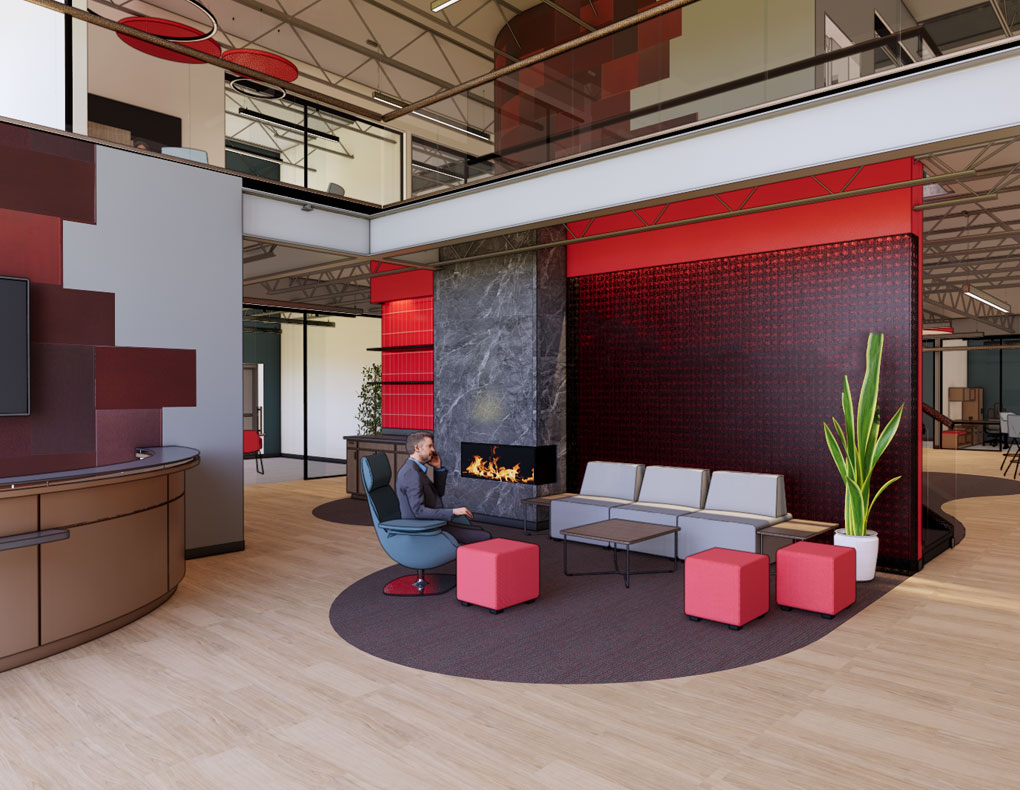
Consider this finding: employees with access to natural light and outdoor views report an 18% increase in productivity.
Meanwhile, open-plan offices, once celebrated as collaborative utopias, increase negative mood and psychological stress.
When calculating your office renovation cost, try to factor in what you’re currently losing.
The average office worker is productive for only 2 hours and 53 minutes daily.
And to attribute all of this to laziness is a missed opportunity to control what you can: the office environment.
Employees are interrupted every three to five minutes at work, and once interrupted, it can take a long time to refocus, depending on the person.
A thoughtful renovation can dramatically reduce these friction points through better acoustic management and spaces that support the actual work people do.
It can also create the bright, airy space it’s easier to focus and think in.
To design the space beautifully, you have to consider your employees’ daily flow with care.
The Retention Calculation
The average cost of losing an employee runs between 30% and 200% of their annual salary, depending on seniority.
And studies show that companies with higher employee engagement see significantly lower turnover, almost half.
This engagement is inseparable from environment.
According to research on workplace well-being, about two thirds of employees would consider leaving a company that doesn’t focus on employee well-being.
So, truly, your office is one of the loudest statements you make about whether you value your people.
The hospitality design approach that smart companies are now bringing to their workspaces isn’t frivolous, not at all.
Scope and Scale: What’s Right for You?
Not every renovation needs to be a comprehensive transformation.
Sometimes a focused office renovation addressing specific pain points delivers the highest return.
- Light refresh ($20-$50/sq ft): New paint, carpet, updated light fixtures.
- Moderate renovation ($50-$150/sq ft): Layout modifications, improved lighting design, acoustic treatments.
- Major transformation ($150-$300+/sq ft): Complete buildout, technology integration, HVAC upgrades.
Naturally, your choice should align with your goals.
If employee morale is suffering but your infrastructure is sound, the moderate path might suffice.
And if you’re preparing for a decade of growth in a space with outdated systems, the major transformation pays dividends over time.
Understanding commercial interior design principles and commercial building architectural design helps you invest wisely rather than lavishly.
The Hidden Costs
Permit fees vary wildly by municipality, so be sure to budget $1,000 to $3,000 for a medium-sized project, potentially more in major metros.
ADA compliance upgrades can range from $5,000 to over $100,000 depending on your building’s current state.
HVAC, electrical, and plumbing system upgrades to meet current codes typically add $10 to $25 per square foot.
And then there’s disruption cost, the productivity lost during construction.
These are one of the biggest reasons why phased approaches and experienced commercial building design services matter.
Working With the Right Partners
Retail design projects taught us something applicable to every commercial renovation:
The experience of a space is inseparable from its function.
The professionals who understand this deliver differently.
When vetting partners, look for firms that ask about your culture before they ask about your budget, who want to observe how your team actually works before proposing solutions.
Those working in modern restaurant interior design have pioneered approaches to atmosphere that every office renovation should learn from, the understanding that how a space feels directly impacts behavior and outcomes.
The Decision Before You
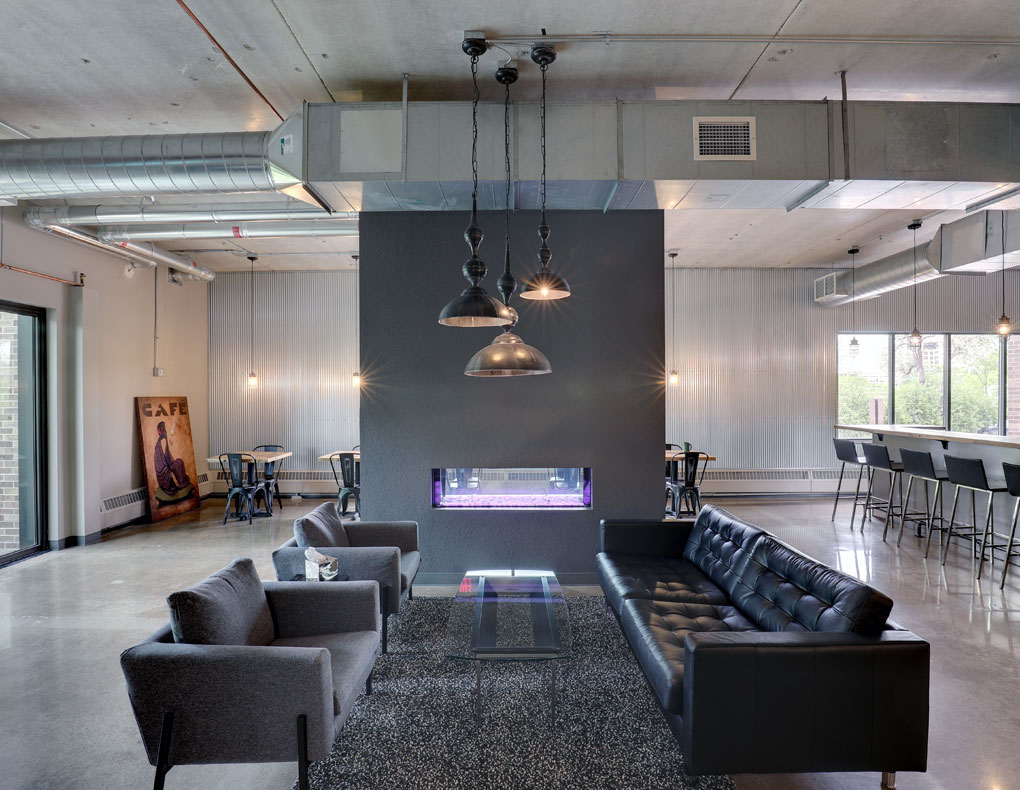
Office renovation cost is real, significant, and worthy of serious consideration.
But it’s not merely an expense.
It’s also a statement about what you believe your people deserve, and it completely changes an office’s dynamic.
The restaurant space planning experts figured something out long ago that we’ve seen in practice time and time again at Studio M Architects:
Every square foot either earns its keep or drains resources.
The same principle applies to your office.
Perhaps now is the moment to stop asking how much an office renovation costs and start asking how much not renovating is costing you.
If you’d like to explore how thoughtful design can support your vision, feel free to contact our team at Studio M, as we’d be glad to share insights and talk through your specific goals.
Recent Comments